
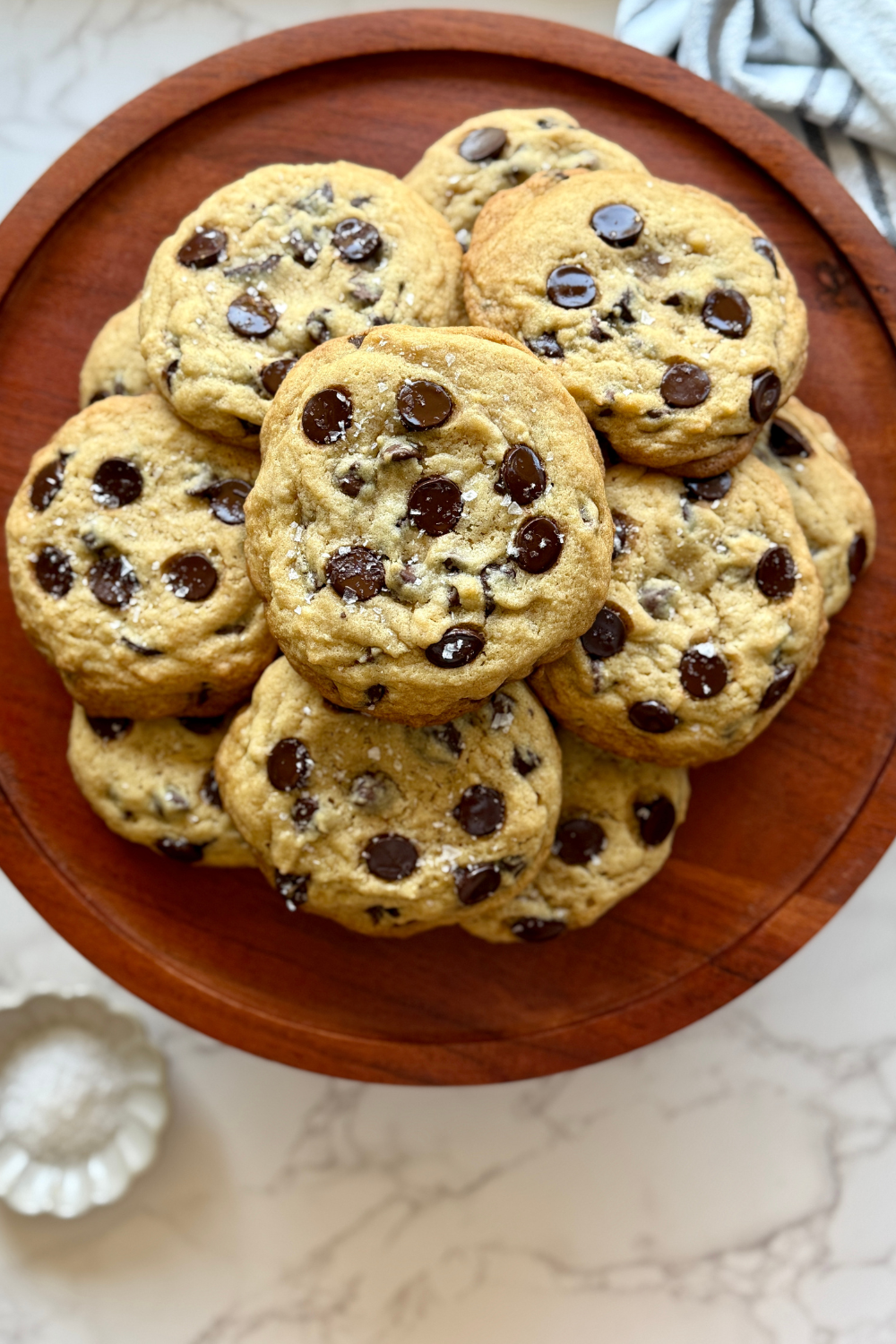
Listen, I’ve made a lot of chocolate chip cookies in my day. Like, embarrassingly many. There was that phase where I convinced myself I was “perfecting my technique” but really I was just stress-baking my way through a Netflix binge. But these cookies? These are the ones that made me stop my relentless cookie quest and actually say “damn, that’s good” out loud to my empty kitchen.
The secret isn’t some fancy technique or exotic ingredient. It’s stupidly simple: use two different types of chocolate, and one of them should be Trader Joe’s 72% dark chocolate chips. Or honestly, any good dark chocolate bar that you chop up yourself. The magic happens because these don’t have stabilizers like regular chocolate chips, so they get properly melty and spread into the cookie instead of just sitting there like little chocolate soldiers.
Why Two Chocolates Change Everything
Most people think chocolate is chocolate, but that’s like saying all wine is the same because it’s made from grapes. The semi-sweet chips give you those classic chocolate chip cookie vibes—familiar, comforting, what your brain expects. But the dark chocolate? That’s where things get interesting.
When you use Trader Joe’s 72% dark chocolate chips or chop up a good dark chocolate bar, you’re dealing with chocolate that doesn’t have stabilizers. Regular chocolate chips are engineered to hold their shape, which is great for a perfect-looking cookie photo but terrible for actual flavor distribution. The unstabilized dark chocolate melts and spreads through the cookie, creating these gorgeous chocolate veins and pockets of intense chocolate flavor.
Plus, that higher cocoa percentage means you get actual chocolate complexity—not just sugar with a chocolate costume. It’s the difference between a cookie that tastes like dessert and a cookie that tastes like it knows what it’s doing.
The Room Temperature Butter Game Changer
Here’s the thing nobody tells you about chocolate chip cookies: room temperature butter is the difference between cookies that taste homemade and cookies that taste like you actually know what you’re doing. Cold butter won’t cream properly with the sugar, which means no fluffy texture. Melted butter turns your cookies into flat pancakes.
But when your butter is perfectly room temperature—soft enough to leave a fingerprint but not squishy—magic happens. It creams with the sugar to create air pockets that give you that perfect chewy-but-not-dense texture. Plus, room temperature butter incorporates the eggs and vanilla way better, so you get even flavor distribution instead of random pockets of vanilla.
The test? Press your finger into the butter. If it leaves an indent without your finger going all the way through, you’re golden. If it’s too hard, microwave it for 10 seconds. If it’s too soft, stick it in the fridge for a few minutes. This one detail will level up every cookie you ever make.
Pro Tips from Someone Who’s Made Way Too Many Cookies
Room temperature butter is non-negotiable. If you can press a finger into it and leave an indent without it being squishy, you’re good. Cold butter won’t cream properly, and melted butter will give you flat cookies.
Don’t overmix the dough. Once you add the flour, mix just until you don’t see dry flour anymore. Overmixing develops gluten, which makes cookies tough instead of tender.
The rough texture is intentional. Don’t smooth out those cookie dough balls. Those peaks and valleys create different textures as they bake, giving you crispy edges and chewy centers in the same cookie.
Space them out. Four cookies per pan with 4 inches between them. These cookies spread, and you don’t want them turning into one giant cookie pancake.
Let them rest on the pan. Five minutes on the baking sheet after they come out of the oven. They’re still cooking from residual heat, and moving them too early will make them fall apart.
Why You Just Became Everyone’s Favorite Person
You didn’t just make cookies—you made the cookies people will ask you to bring to every gathering. The ones that disappear first at potlucks. The ones that make people text you at 9 PM asking if you have any leftovers.
The two-chocolate thing isn’t just about flavor; it’s about showing you understand that good food comes from smart choices, not complicated techniques. You figured out that the best cookies aren’t about following the rules—they’re about knowing which rules to break.
Frequently Asked Questions
Can I use regular chocolate chips instead of the dark chocolate? You can, but you’ll lose the melty, vein-like chocolate distribution that makes these special. The stabilizers in regular chips keep them from melting properly.
What if I can’t find Trader Joe’s 72% dark chocolate chips? Any good dark chocolate bar (70-75% cocoa) chopped into chunks will work. Just avoid chocolate with lots of stabilizers.
Can I make these ahead of time? The dough can be made up to 2 days ahead and stored in the fridge. You can also freeze scooped cookie dough balls for up to 3 months.
How long do these cookies stay fresh? About a week in an airtight container at room temperature. They also freeze well for up to 3 months.
Can I double the recipe? Absolutely. Just make sure you have enough baking sheets and parchment paper.

Two-Chocolate Cookies
Ingredients
Method
- Preheat and prep. Get your oven to 350°F and line a baking sheet with parchment paper.
- Mix the dry stuff. In a medium bowl, whisk together flour, baking powder, baking soda, and cornstarch. Set this aside and forget about it for now.
- Cream like you mean it. In a large bowl, cream together brown sugar, granulated sugar, and room temperature butter until light and fluffy. This should take about 3-4 minutes with an electric mixer.
- Add the wet ingredients. Beat in eggs one at a time, then vanilla extract. Keep mixing for 3-4 minutes until the batter turns pale and the sugar is well incorporated. Add the pinch of salt.
- Bring it together. Gradually mix in the dry ingredients until just combined. Don’t overmix—once you stop seeing dry flour, stop mixing.
- Chocolate time. Stir in both types of chocolate. This is where the magic happens—those unstabilized dark chocolate pieces are about to make your cookies legendary.
- Scoop and space. Drop 3-4 tablespoon-sized balls of dough onto your prepared baking sheet. Leave them slightly rough and rustic-looking—those peaks and valleys will create amazing texture. Space them 4 inches apart (4 cookies per pan) because these babies spread. Top with a few extra chocolate chips because we’re not here to be subtle.
- Bake low and slow. Bake for 13-16 minutes on the middle rack, until the edges are lightly golden brown. The centers might look slightly underdone, but they’ll finish cooking on the hot pan.
- The waiting game. Let them cool on the baking sheet for 5 minutes before transferring to a wire rack. This isn’t optional—move them too early and they’ll fall apart.
Keywords: two chocolate cookies, dark chocolate cookie recipe, Trader Joe’s chocolate chips, low temperature baking, chewy chocolate chip cookies, best chocolate chip cookie recipe, unstabilized chocolate chips, melty chocolate cookies, bakery style cookies, homemade chocolate chip cookies