
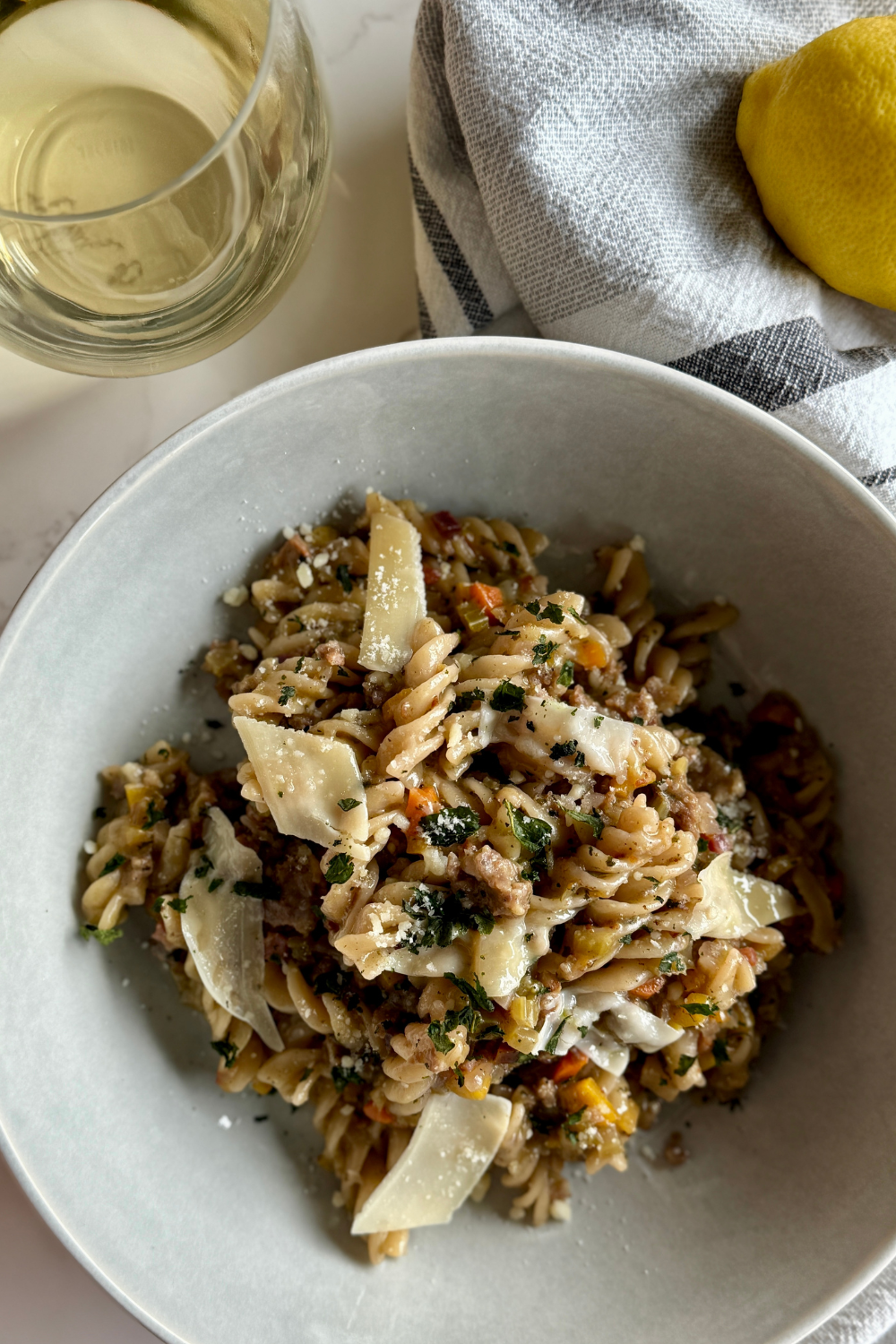
The first time I made this, I was honestly just tired of tomato sauce. Don’t get me wrong, I love a good marinara, but sometimes you want something rich and meaty without that acidic tomato bite. I was craving Bolognese-level comfort but wanted something that felt lighter, brighter, more sophisticated. So I started googling “Bolognese without tomatoes” and discovered that white Bolognese is actually a thing that Italians have been perfecting for centuries. Turns out, my pasta sauce crisis led me to something way better than I expected—and definitely something I perfected through about twelve rounds of “this needs more wine” and “wait, did I add the cream yet?”
This isn’t your typical red sauce situation. We’re talking about a rich, creamy, wine-forward sauce that tastes like someone took traditional Bolognese and gave it a sophisticated makeover. It’s got all the depth and complexity of the original, but with this bright, lemony finish that makes you want to lick the bowl clean. Which I may have done. Multiple times.
Why This Recipe Will Ruin Regular Bolognese for You
Traditional Bolognese is great, don’t get me wrong. But once you’ve had this white version, going back feels like trading in your sports car for a minivan. The white wine and chicken broth create this incredibly rich base that doesn’t rely on tomatoes to carry the flavor. Instead, you get pure meat, herb, and wine magic that lets every ingredient shine.
The secret weapon here is the pancetta. Most people skip it because they think bacon is bacon, but pancetta brings this subtle saltiness that bacon can’t match. It renders down into these perfect little crispy bits that add texture and depth to every bite. Plus, cooking everything in that rendered fat creates layers of flavor that you just can’t get any other way.
Pro Tips from Someone Who’s Made This Way Too Many Times
- Don’t skip the pancetta. Yes, bacon works in a pinch, but pancetta is worth the extra trip to the fancy grocery store. It’s saltier, fattier, and doesn’t have that smoky flavor that can overpower the wine.
- Use decent wine. You’re adding a whole cup and a half, so don’t go with the stuff you wouldn’t drink. Sauvignon Blanc works perfectly, but any dry white wine will do the job.
- Let the wine cook off. This is crucial. You want that alcohol to evaporate and the wine to reduce slightly before adding the broth. Otherwise, you’ll end up with boozy pasta, which sounds fun but tastes terrible.
- Fresh herbs matter. Dried herbs work, but fresh rosemary and basil make this dish sing. If you can only get one fresh, make it the rosemary.
Why You Just Became a Weeknight Hero
You took a sauce that most people think requires all day simmering and turned it into something you can make on a Tuesday night. That’s not luck, that’s understanding how to build flavor quickly. The combination of browning the meat, rendering the pancetta, and deglazing with wine creates the same depth that traditional recipes get from hours of cooking.
The fact that this all happens in one pot while you do other things is just the cherry on top. Next time someone asks what’s for dinner, you can casually mention your white Bolognese like it’s no big deal. Even though we both know you’re probably going to make it every week for the foreseeable future.
Frequently Asked Questions
What kind of pasta works best? While pappardelle or fettuccine are traditional, I find it’s easier to cook the noodles in the sauce using short-cut pastas like farfalle and fusilli. Really, any pasta should work.
Can I make this without pancetta? You can use bacon, but cut back on the salt since bacon is saltier than pancetta. In a pinch, you could skip it entirely, but you’ll lose some of that rich depth.
How long does this keep? About 3-4 days in the fridge. It actually tastes better the next day after all the flavors have had time to meld together.
Can I freeze this? The sauce freezes well for up to 3 months. Just add the cream and cheese when you reheat it, not before freezing.
What if I don’t have white wine? You could use chicken broth instead, but you’ll lose some of the complexity. The wine is really what makes this sauce special.
Can I add vegetables? Traditional recipes include carrots and celery with the onion. I listed celery and carrot in the instructions even though they’re not in the ingredient list—feel free to add 1 diced carrot and 1 diced celery stalk.

One-Pan White Bolognese
Ingredients
Method
- Brown the meat. Heat 1 tablespoon olive oil in a large, heavy-bottomed pot over medium-high heat. Add the ground beef and cook, breaking it up with a spoon, until browned but still slightly pink in places. Don’t overcook it—it’ll finish cooking in the sauce. Remove with a slotted spoon and set aside.
- Render the pancetta. Add the diced pancetta to the same pot (don’t clean it) and cook for about 10 minutes until it’s golden and crispy. The fat it renders is liquid gold—that’s what’s going to make this sauce incredible. Remove with a slotted spoon and set aside with the beef.
- Build the flavor base. Add the diced onion, carrot, and celery to the fat remaining in the pot. Season with salt and pepper and cook until softened, about 10 minutes. After 5 minutes, add the minced garlic and herbs and continue cooking until fragrant.
- Deglaze and simmer. Add the meat and pancetta back to the pot, then pour in the white wine. Let it bubble and cook off for 3-4 minutes—you want that alcohol to evaporate and the wine to reduce slightly. Add the chicken broth, bring to a simmer, then reduce heat to low.
- Add the pasta. This is where it gets interesting—add your uncooked pasta directly to the sauce. Stir to combine, cover, and let it cook for 20-25 minutes, stirring occasionally. The pasta will absorb the liquid and cook in all that flavor.
- Finish with brightness. Stir in the lemon juice, lemon zest, and cream. Let it bubble gently for 3-4 minutes to bring everything together.
- Cheese and serve. Sprinkle in the grated Parmesan and stir until melted. Taste and adjust seasoning. Serve immediately with shaved Parmesan on top and maybe some extra black pepper.
Keywords: white bolognese recipe, creamy bolognese, Italian white sauce, pancetta pasta recipe, one pot bolognese, white wine pasta sauce, easy bolognese recipe, traditional Italian pasta, weeknight pasta dinner, homemade bolognese sauce